
Climate risks: why SMEs need to prepare now
The world will overshoot 1.5 °C. Europe is setting a framework. Here is what it means for an SME and where to start.
Read this article in: Français | Nederlands
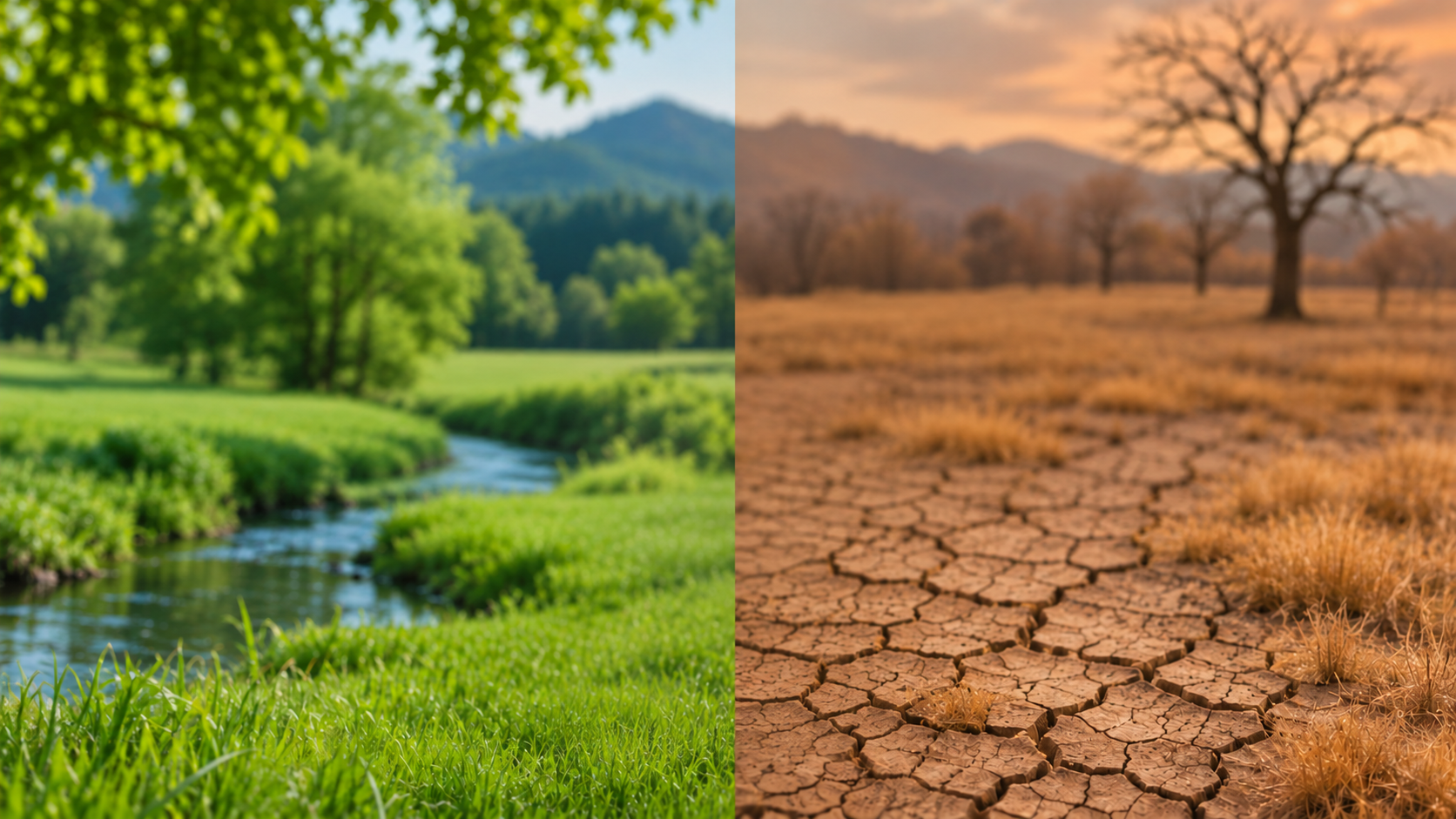
The world will soon exceed 1.5 °C of warming. In response, the European Commission has just presented a climate resilience framework. This article explains what it means for an SME and where to begin.
The 1.5 °C threshold will not hold
The United Nations Environment Programme (UNEP) confirmed it in October 2026. The world is set to overshoot 1.5 °C of warming. The best scenario still within reach points to a peak between 1.7 and 1.8 °C around the middle of the century.
To understand why, we need to talk about the carbon budget. This is the total amount of CO2 that can still be emitted before a given level of warming is exceeded. To have a one-in-two chance of staying below 1.5 °C, around 130 billion tonnes of CO2 remain. At the current rate, that budget would be used up in about three years.
Every five-year period of emissions at today's level adds roughly 0.1 °C to the peak of warming.
There is still room to act. A return below 1.5 °C by the end of the century remains possible, provided emissions fall quickly and CO2 is removed from the atmosphere. The threshold will be exceeded, but the size and duration of the overshoot can still be limited.
A costly summer
The heatwaves and droughts of summer 2026 made the concrete cost of extreme weather clear. Rivers reached historically low levels, and forest fires multiplied.
The European Commission estimates that climate-related economic losses reached around 200 billion euros between 2022 and 2025. That is roughly 50 billion euros a year. These losses affect citizens, businesses and infrastructure.
Behind these figures are real companies. When an extreme event strikes, local activity stops first: production halts, stock is damaged and orders arrive late. Businesses that have not prepared bear these consequences most heavily.
Europe sets out a framework
On 27 October 2026, the European Commission presented a framework for climate resilience (the EU Framework for Climate Resilience). Its aim is to move from crisis management to resilience built in from the design stage of projects.
The framework comes with a proposed law on climate resilience. Its main points are as follows.
- A common reference trajectory. The law sets a baseline warming scenario. It will be used to assess future risks, for the public sector and for private companies alike.
- Resilience built into all policies. Climate must be taken into account in major EU files, whether energy, transport or agriculture.
- Simpler national plans. Each Member State would have a single strategic plan, to reduce administrative complexity.
- A financing need. The Commission estimates that around 70 billion euros a year would be needed to adapt European infrastructure. The private sector is explicitly invited to invest.
An EU climate resilience strategy is scheduled for 2028. The proposal still has to pass through the European Parliament and the Council, so it may change. Its direction is already clear.
Why prepare now
Preparing is about more than sound management. Several concrete reasons push companies to act now.
- Customers and clients are asking more questions. A buyer wants to know whether a supplier can keep delivering during a heatwave or a flood.
- Insurers and banks are looking more closely at these risks. An exposed site may face tougher insurance or financing terms.
- Regulation is moving. For companies subject to the CSRD, the analysis of physical climate risks is part of the requirements.
- Delay becomes more expensive. Adapting a building, relocating production or changing supplier takes months. It is better to start before urgency makes the decision for you.
Adaptation and reduction go together
This point matters. Adaptation only makes sense if it goes hand in hand with cutting emissions. The two are like the two sides of the same coin.
A world at +4 °C would be very hard to live and produce in. Adaptation measures would no longer be able to cope with conditions that extreme. Consider a flood that raises water levels by several metres. Defences designed for past events could fail, even if they are well maintained.
That is why the aim is a trajectory of +1.5 to +2 °C. It requires structural change: the energy mix, production processes, the choice of suppliers and the location of sites. These changes go deeper than an action plan. They call for a clear vision of the company's future.
Where to start: a climate risk assessment
The right first step is a climate risk assessment. It shows where the real vulnerabilities lie, before you invest.
The assessment usually follows four stages.
- Map the company. List the sites, buildings, equipment, energy sources and key suppliers.
- Identify physical risks and the company's sensitivity to them. These are climate hazards such as heatwaves, floods, droughts, water shortage and storms, and the way the company is exposed to them. Take a fully concreted site of several hectares. It is far more sensitive to flooding than a site with permeable ground, such as grass paving or well-drained soil. Here the hazard is flooding, and the sensitivity depends on how well the ground lets water through.
- Identify transition risks and opportunities. The transition is reshaping the economy, and therefore your activity. The carbon price weighs mainly on heavy emitters. The EU Emissions Trading System (EU ETS) directly affects production costs. The transition also opens new markets, such as demand for organic products, the growth of car sharing and new low-carbon solutions.
- Set priorities and act. For each risk, define an adaptation response, such as protection, diversifying suppliers or a fallback plan, and a reduction response, such as energy efficiency, electrification or lower consumption.
ESGlogic offers this assessment to SMEs. It covers sites, assets, energy and suppliers.
Key takeaways
- The 1.5 °C threshold will be exceeded. It is still possible to limit the overshoot.
- Europe is preparing a framework and a reference trajectory that will shape public and private decisions.
- Adaptation and reduction go together: neither works without the other.
- Businesses should start with a climate risk assessment and a carbon footprint, so they can work on adaptation and reduction together.
Conclusion
The climate is changing, and Europe is beginning to organise its response. For an SME, the right answer is neither inaction nor panic. It is a clear risk assessment, followed by concrete action on adaptation and reduction.
To find out which climate risks threaten your sites and your supply chain, request a first climate risk assessment at esglogic.eu/en/contact.
Want a climate risk assessment for your business? Request it here.
Calculate your emissions with Carbon Logic
Another first step is to calculate your emissions. Our Carbon Logic tool guides you step by step, from scopes 1 to 3 under the GHG Protocol.
More insights
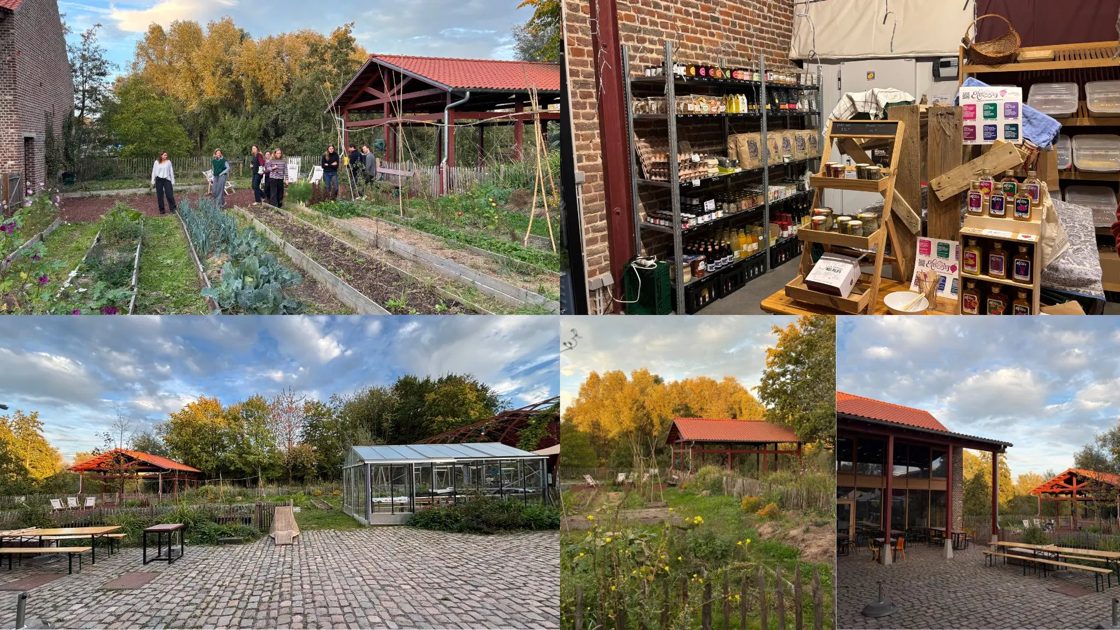
Sustainable Team Building at La Ferme du Chaudron in Brussels
Looking for a sustainable team building activity in Brussels with real meaning? La Ferme du Chaudron, in Brussels, brings together sustainable food, playful educational activities and team bonding around food, the environment and wellbeing. At ESGlogic, we chose the homemade stock workshop for our team evening.

ESG tools for SMEs: how to choose the right one in 2026
A client sends you an ESG questionnaire. Your bank asks for sustainability indicators. A major customer requires a rating. Faced with these data requests, many SME leaders start looking for an ESG tool without knowing which one fits their situation. This article helps you work out what you need and which type of tool meets it, without overspending.
Which ISO certification is right for your Belgian SME?
ISO 14001, ISO 50001 or ISO 20121: three concrete ISO certifications for Belgian SMEs looking to structure their environmental or energy approach. This guide helps you choose the right one.